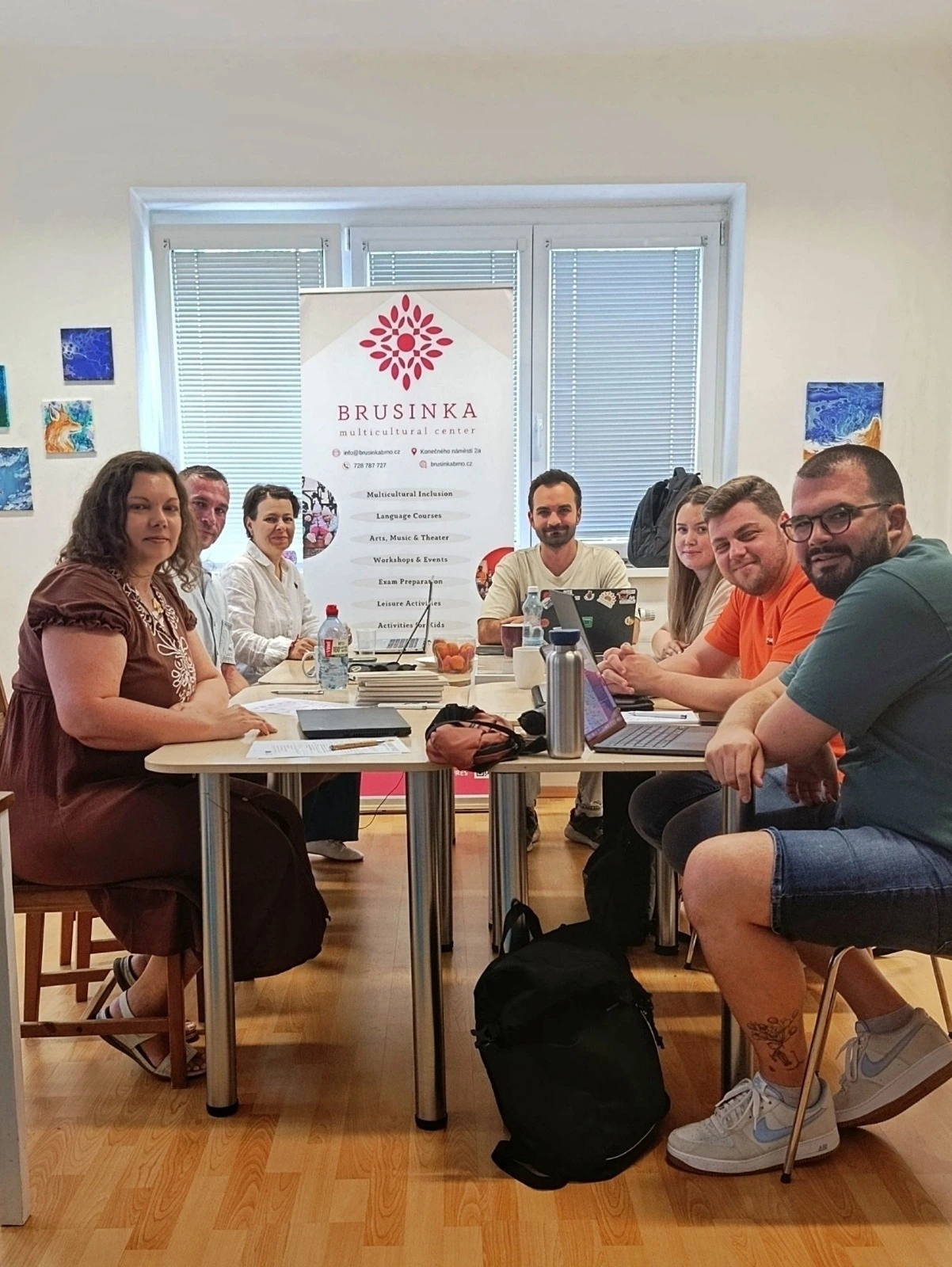
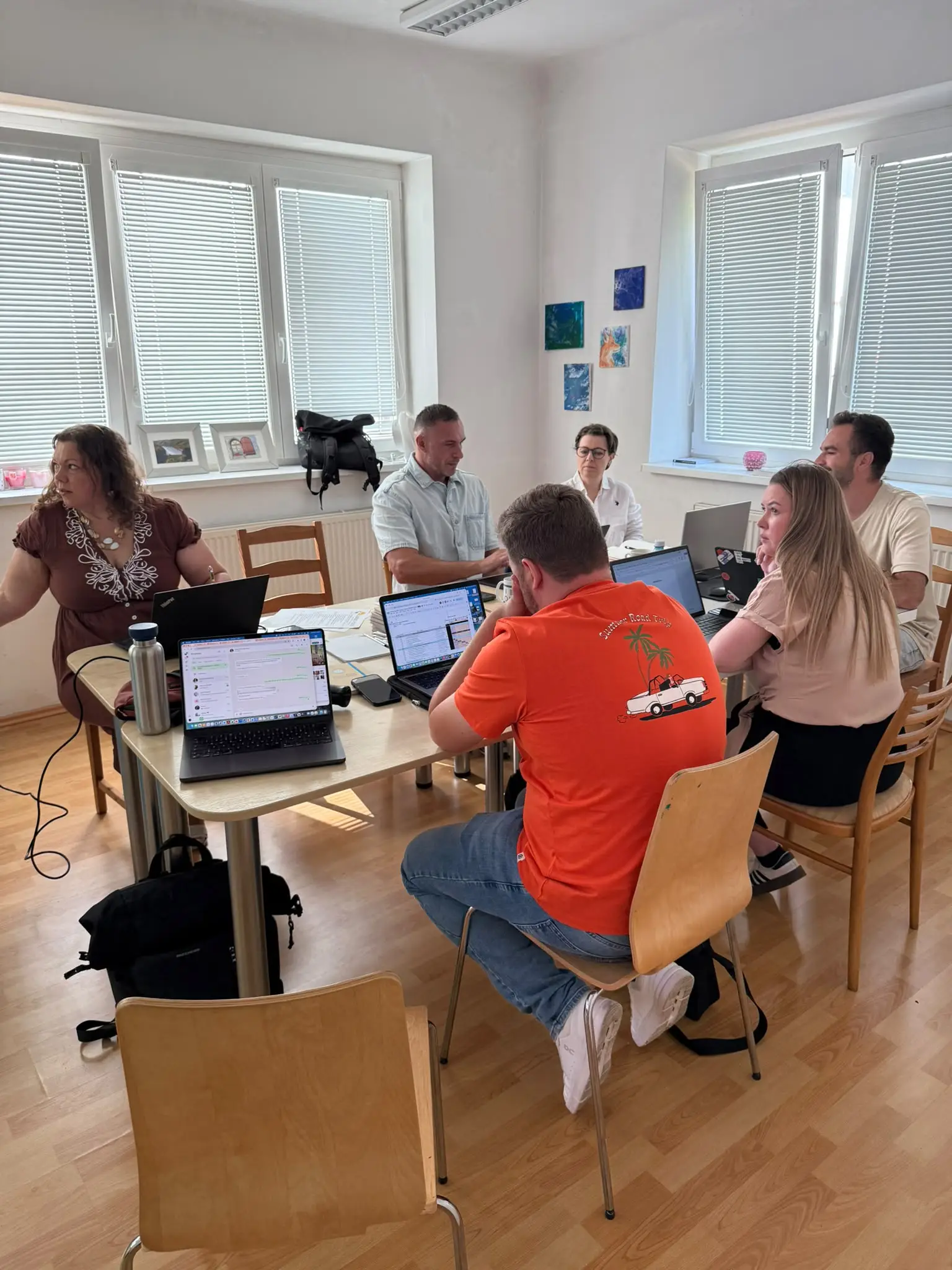
On 23–24 July 2026, DANUBE PEACE partners gathered in Brno, Czech Republic, hosted by Multicultural Center Brusinka, for a transnational project meeting dedicated to Work Package 4 – DANUBE PEACE Open Educational Resources (OERs). The two-day working meeting brought together representatives from all six partner organisations to shape the structure, content, and delivery of the project’s peace education curriculum for adult educators.
Building on the findings of the WP2 Comprehensive Mapping Report and the animated explainer videos in development under WP3, partners agreed on a modular curriculum of six OER modules, each combining a core concept, a practical facilitation method, at least one real regional example, localisation notes, and a ready-to-use educator activity:
Each module will draw on concrete, regional practice; from Mostar’s youth clubs and the War Childhood Museum, to Brno’s Nekonečný příběh, the Ukrainian Peacebuilding School, Vukovar’s Peace Studies programme, and the long-running Donau Fest cooperation in Ulm/Neu-Ulm; ensuring the curriculum reflects lived experience across the Danube region rather than abstract theory alone.
A dedicated session explored the Donau Fest and Donaubüro Ulm/Neu-Ulm as a case study in sustained cross-border cultural cooperation, drawing out several strategic lessons for the DANUBE PEACE curriculum: that peacebuilding needs both grassroots dialogue and public commitment; that dialogue must be actively organised rather than left to chance; that culture opens doors but facilitation determines what happens next; and that European cooperation becomes credible to citizens when it is anchored in named people, local projects, and long-term institutional roles – not policy language alone.
Partners also confirmed the learning formats to be integrated into each module; including the WP3 animated explainer videos, case studies, practical exercises, reflection activities, facilitation tools, and downloadable and interactive digital resources.
A clear partner contribution matrix was agreed, assigning each organisation a primary content focus, regional evidence base, and localisation responsibility, alongside a detailed content development workflow; from module brief and draft activity, through peer review and localisation, to testing and final publication. Every module will be peer-reviewed by a partner from outside its own country context, to check clarity and transferability across the region.
The group set out a working timeline for the coming months: templates finalised by end of July, regional examples submitted by early August, module outlines by mid-August, first drafts by end of August, followed by peer review, revisions, and translation through the autumn – with a first full draft expected by October–November 2026 and finalisation targeted for March 2027.
Beyond WP4, partners reviewed progress on the WP2 Comprehensive Mapping Report, discussed the design and content of the interactive digital map of peace education initiatives, and agreed next steps for testing, translation, and stakeholder feedback across the network. The upcoming project website and digital map were also discussed, with plans to make demo versions available soon to support piloting and feedback collection.
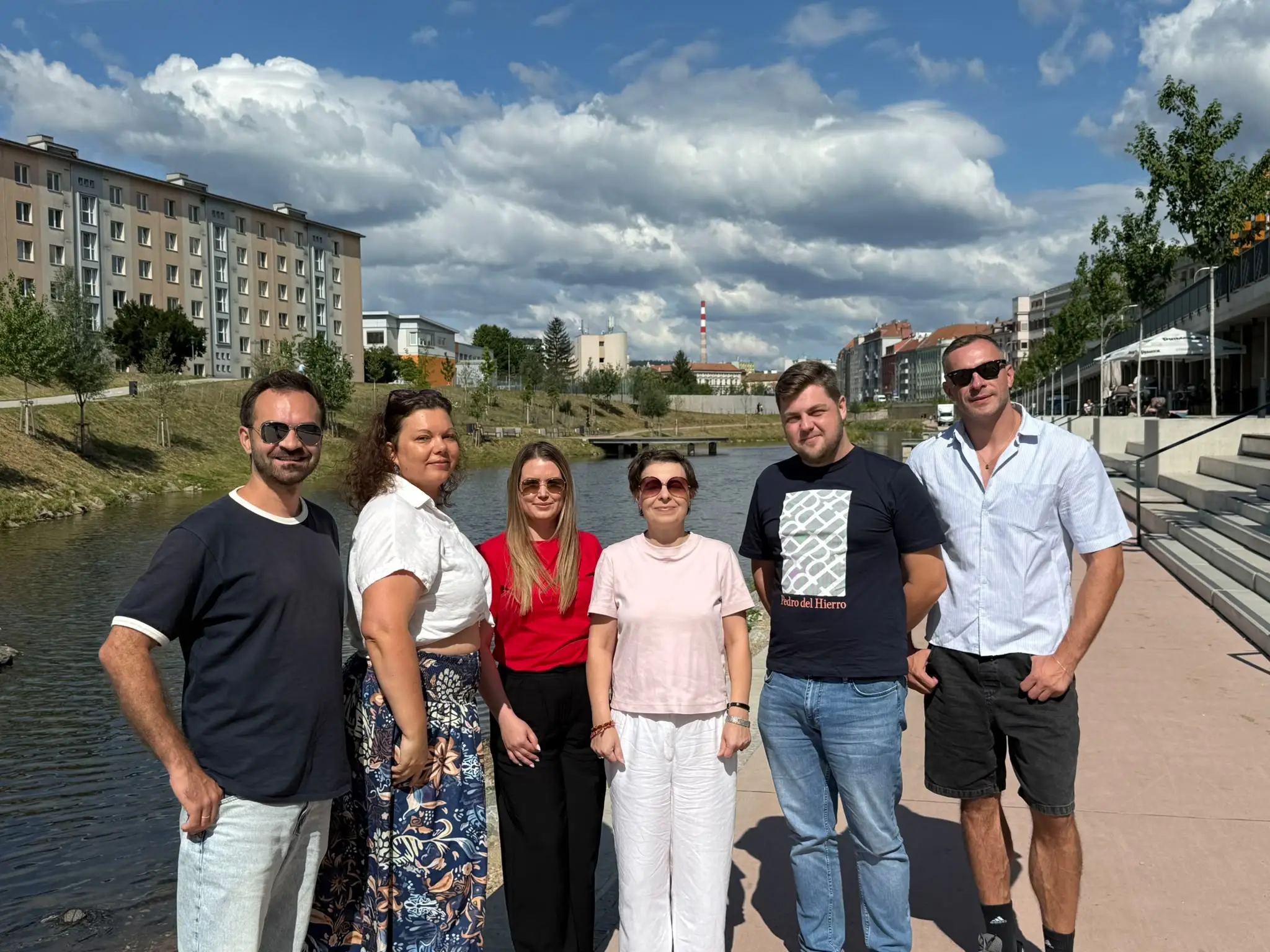
The Brno meeting closed with a shared roadmap for WP4 implementation and a strong sense of momentum – partners also enjoyed local Moravian hospitality, a walk along the Svratka river, and a taste of South Moravian wine and Czech beer alongside the working sessions.
Our goal is to contribute to the development of a society with positive values, a society that is recognising the importance of critical thinking, healthy lifestyles and providing equal opportunities for all. Spin is dedicated to creating and providing equal opportunities for all.
Have an idea that you want to turn into a project, have project you need help to implement, want to develop an online course?
Contact SPIN!
© Spin 2024 | Design by AMDesign